
How to Dry Boots in a Hunting Cabin
Wet hunting boots can turn a great trip into a miserable one by the second morning. Whether you crossed a creek, pushed through snow, or sweated through a long stalk, damp boots in a cold cabin are uncomfortable, cold, and a fast track to blisters. Drying them properly in a hunting cabin takes a little planning, but it is absolutely doable even without full utilities.
We’ll walk through the methods that work best in a cabin setting — from simple no-power tricks to using a boot dryer when you have electricity or a generator. Most of these approaches use things you already pack, and none require special equipment.
Disclosure: Boot Dry Expert is reader-supported. As an Amazon Associate, we earn from qualifying purchases. This doesn’t change the price you pay, and it doesn’t change our recommendations.
Why Drying Boots in a Hunting Cabin Is Different
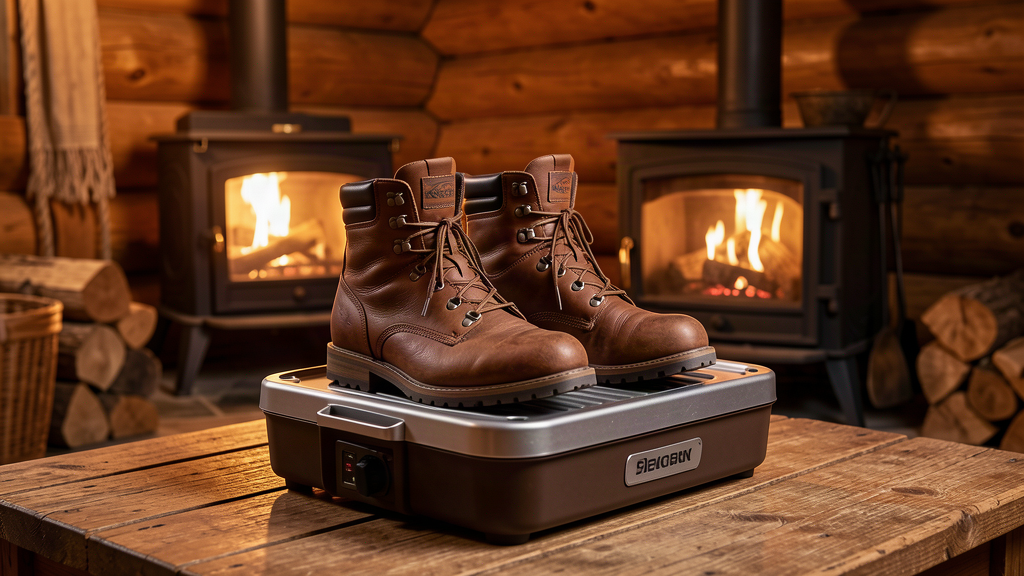
A hunting cabin is not your living room. Temperatures can drop below freezing at night, humidity from cooking and wet gear hangs in the air, and power may be limited to a small generator, a solar setup, or nothing at all. All of these factors slow down drying and make it harder to get boots ready for the next morning.
Cold air holds less moisture, so wet boots dry slower in a chilly cabin than in a warm house. If the cabin sits at 40°F, expect drying times to double or triple compared to room temperature. Add in the thick insulation and waterproof membranes that hunting boots use, and you have a real challenge on your hands.
The good news is that a few smart habits make cabin boot drying straightforward. Start the process as soon as you come in from the field and use whatever heat and airflow the cabin provides.
Remove Insoles, Laces, and Excess Moisture First
The single most effective step is to take the insoles out of your boots immediately. Insoles are thick, absorbent, and sit at the very bottom of the boot where air barely circulates. Left in place, they can hold moisture for 24 to 48 hours even when the rest of the boot feels dry. Pull them out and set them near a heat source or in a dry spot with good airflow.
Loosen or remove the laces next. Laces trap moisture against the eyelets and tongue, and they restrict airflow through the boot. If you carry a spare pair, swap them in so you can still wear the boots while the originals dry. Open the boots as wide as possible — pull the tongue forward, unzip any side zippers fully, and expose as much interior surface area as you can.
Before any drying method, wipe down the exterior with a towel or bandana. Remove caked-on mud, snow, and surface water from the toe, heel, sole, and upper. For muddy boots, a quick rinse with cool water and a wipe-down is better than letting mud dry and trap moisture against the material.
Stuff with Newspaper or Dry Cloth
Newspaper is one of the oldest and most reliable boot-drying tricks, and it works especially well in a cabin where you may not have power. Crumple sheets of newspaper into loose balls and stuff them inside the boot, pressing them down into the toe box and filling the shaft. The paper absorbs moisture from the interior lining and pulls it away from the boot material.
Replace the newspaper every 30 to 60 minutes as it becomes damp. Plain white paper towels or a dry cotton bandana work too, though they tend to fall apart faster than newspaper. Avoid glossy magazine paper — the coating resists absorption.
For tall hunting boots that go 10 inches or higher, stuff the shaft in layers. Fill the toe area first, then add more crumpled paper up through the calf. The paper also helps the boot hold its shape while it dries, which prevents creasing and cracking in leather. If you do not have newspaper, dry grass or moss can work in a pinch.
Position Boots for Maximum Airflow
Where you place your boots in the cabin matters as much as how you stuff them. Set them in a spot with moving air — near a door that opens regularly, in front of a small battery-powered fan, or on a rack where air can circulate around and inside them. Avoid laying them flat on the floor where cold air pools.
If the cabin has a wood stove or fireplace, place the boots a safe distance away — at least 3 feet — where they benefit from the radiant heat without being exposed to direct high temperatures. The warm air rising from the stove creates a natural convection current that helps carry moisture away. Never place boots directly on or against a stove or heater.
Prop the boots upright with the opening facing slightly downward so gravity helps moisture drain out. If you have a boot rack or even a couple of sticks leaned against a wall, use them to keep the boots vertical.
Use a Boot Dryer When Power Is Available
If your cabin has electricity — whether from a generator, solar setup, or shore power — a dedicated boot dryer is the most reliable way to get boots dry by morning. Convection dryers like the PEET Original are silent, gentle on leather, and cost pennies to run overnight. They use thermal circulation to move warm air through the boot without a fan, making them ideal for a quiet cabin where others are sleeping.
Forced-air dryers like the DryGuy Force Dry DX dry boots faster by pushing heated air through tubes into the boot cavity. They are noisier, but they cut drying time significantly — a real advantage when you have back-to-back hunts or soaked boots. Most forced-air models have a 3-hour auto shutoff, so you can run them overnight without worry.
When using a generator, check the wattage of your dryer and make sure your generator can handle the load. Most boot dryers draw between 100 and 300 watts, well within the capacity of a small portable generator. If you are running a solar setup, a convection dryer is the better choice because it uses less power.
Dry Near a Heat Source — Safely
A wood stove or fireplace is often the best heat source in a hunting cabin, and you can use it to speed up boot drying if you are careful. Place the boots at least 3 feet from the stove where the air is warm but not hot enough to damage materials. The goal is gentle, consistent warmth — not direct heat.
Never put boots directly on a radiator, wood stove, or space heater. Temperatures above 120°F can warp soles, crack leather, melt adhesives, and damage waterproof membranes. The outside of the boot may feel dry while the interior is still soaked, and the heat can cause irreversible damage before you realize it.
A safe trick is to place boots on a rack or stool near the stove and let the rising warm air do the work. The key is distance and airflow — warm air moving past the boots carries moisture away far more effectively than still, hot air.
Prevent Mold, Odor, and Material Damage
Wet boots left in a closed bag or corner of a cabin will develop odor and mold within a day or two. Bacteria thrive in damp, still environments, and once mold sets into the lining, it is difficult to remove. The best prevention is to start drying immediately and keep air moving around the boots until they are fully dry.
Once the boots are dry, sprinkle baking soda inside overnight and shake it out in the morning to neutralize any lingering odor. For leather boots, apply a conditioner after drying — the process strips natural oils, and conditioning restores flexibility and water resistance. This step is especially important for high-end leather hunting boots that you want to last for many seasons.
Store dry boots in a ventilated area, not in a sealed plastic bin. If the cabin will be closed up for the off-season, place moisture-absorbing silica gel packets inside the boots and store them in a breathable bag. This prevents the musty smell that develops when leather and fabric sit in stagnant air for months.
Our Recommendations
If you hunt from a cabin regularly, a dedicated boot dryer is worth the investment. For most hunters, a convection model like the PEET Original is the best starting point — it is silent, gentle on leather, and costs pennies to run overnight. See our full breakdown in 5 Best Boot Dryers for Work Boots in 2026.
If you need faster drying or want to dry two pairs at once, a forced-air model like the DryGuy Force Dry DX is worth the upgrade. And if you are curious how the two technologies compare, read our guide on convection vs forced air boot dryers.
Frequently Asked Questions
How long does it take boots to dry in a cold cabin?
In a cold cabin at 40°F, boots can take 12 to 24 hours to air dry on their own, depending on how soaked they are and the material. Insulated hunting boots take longer than uninsulated models because they hold more moisture. Using newspaper stuffing and a heat source can cut that time roughly in half.
Can I dry boots in front of a wood stove?
Yes, as long as you keep them at least 3 feet away and never place them directly on or against the stove. The radiant heat from a distance speeds up drying safely. Direct contact with a stove can warp soles, crack leather, and melt adhesives.
What is the best way to dry boots without power in a cabin?
The best no-power method combines newspaper stuffing with positioning near a heat source. Remove the insoles, stuff the boots with crumpled newspaper, replace it every hour, and place the boots near a wood stove or fireplace at a safe distance. This can dry most boots overnight.
Can I use a hair dryer on hunting boots?
Yes, but only on the lowest heat setting and with the nozzle at least 6 inches away from the material. Move it constantly and stop as soon as the surface feels dry. High heat damages leather and synthetic materials, so use it sparingly and only when you need a quick fix.
How do I keep boots from smelling in a cabin?
The key is airflow and thorough drying. Odor-causing bacteria thrive in damp, still environments. Remove the insoles, stuff with newspaper, and place the boots in a spot with moving air. Once dry, use baking soda overnight to neutralize any lingering smell. Never store damp boots in a closed bag.
Is it safe to leave a boot dryer on overnight in a cabin?
Yes, most modern boot dryers have auto shutoff timers that prevent them from running indefinitely. A 3-hour timer is standard and sufficient for most drying cycles. Just make sure your power source — generator or solar — is stable and the dryer is on a flat, stable surface away from flammable materials.
Conclusion
Drying boots in a hunting cabin comes down to three things: removing as much moisture as possible, getting air moving through the boot, and using whatever heat source is available safely. Remove the insoles, stuff with newspaper, and position the boots near a wood stove or with a fan — that combination handles most situations even without power. If you have electricity, a dedicated boot dryer makes the process effortless.
Start the drying process as soon as you come in from the field, be patient with leather, and your boots will be ready for the next morning. A little effort the night before makes all the difference when you are heading out at dawn.