
How to Dry Boots in a Workshop
Drying boots in a workshop is one of the most practical skills you can develop if you work with your hands, spend time outdoors, or live in a wet climate. A workshop gives you space, ventilation, and access to tools that make drying faster and more effective than most indoor locations. Whether you’re dealing with soaked leather work boots, muddy rubber boots, or damp synthetic hiking boots, the right approach keeps your footwear ready for the next day.
In this guide, we’ll walk through exactly how to dry boots in a workshop, from setting up a simple drying station to using a dedicated boot dryer for faster results. You’ll learn how to prepare your boots, choose the right drying method, and avoid common mistakes.
Disclosure: Boot Dry Expert is reader-supported. As an Amazon Associate, we earn from qualifying purchases. This doesn’t change the price you pay, and it doesn’t change our recommendations.
Why a Workshop Is a Great Place to Dry Boots
Workshops are naturally well-suited to drying boots. They have concrete floors that handle water and mud without damage, more square footage to spread out gear, and better airflow when a door or window is open. You also keep wet, dirty boots out of your living areas where they can leave puddles and odors on carpets and hardwood floors.
Most workshops have electrical outlets, so you can run a boot dryer, fan, or dehumidifier without extension cords from the house. The main challenge is temperature control. In winter, an unheated workshop can drop below freezing, which slows drying and stiffens leather. In summer, a closed workshop can become hot and humid, which also slows evaporation. A small space heater or portable fan can help you manage these conditions.
Workshops also have better ventilation than interior rooms. Even a small gap under the door or a partially open window creates enough airflow to keep moisture from building up — especially important when drying multiple pairs at once, since each pair releases water vapor into the surrounding air as it dries.
Prepare Your Boots Before Bringing Them to the Workshop
A little prep work makes the whole process faster. Start by removing the insoles and laces. Insoles are thick, absorbent, and sit at the bottom of the boot where air barely circulates — left in place, they can hold moisture for 24 to 48 hours even when the rest of the boot feels dry. Pull the laces out completely and set them aside to dry separately. Open the boots as wide as you can — pull the tongue forward and unzip any side zippers fully. The goal is to expose as much interior surface area to moving air as possible.
Next, wipe down the exterior with a towel. Remove as much surface water as you can from the toe, heel, sole, and upper. If the boots are muddy, rinse them under cool water first — dried mud traps moisture against the material. For leather boots, use a clean, dry microfiber cloth and pay attention to seams and stitching where water collects.
Set Up a Drying Station in Your Workshop
Having a dedicated spot keeps things organized and prevents tripping over wet gear. Choose a corner near an electrical outlet if you plan to use a fan or boot dryer. A concrete floor is ideal because it won’t be damaged by water or mud. Place a boot tray or folded towel under the boots to catch drips. If your workshop has a window, open it a few inches for cross-ventilation — even a small gap makes a significant difference in airflow.
In colder months, a small space heater can raise the temperature — just keep it at least 3 feet away from the boots and never leave it unattended. If your workshop tends to be damp, a dehumidifier can make a noticeable difference, especially during rainy seasons. High humidity slows evaporation regardless of temperature, so managing moisture in the air is just as important as managing it in the boots.
Air Drying Boots in the Workshop
Air drying is the simplest and most gentle method. After removing the insoles, laces, and surface moisture, stuff the boots with crumpled newspaper or plain white paper towels. The paper absorbs moisture from the interior lining and pulls it away from the boot material. Replace the paper every 30 to 60 minutes as it becomes damp. Position the boots so air flows directly into the opening — tilt them on their side or prop them up with the mouth facing outward.
Point a box fan or desk fan at the boots to keep air moving. Moving air is the key to fast drying. For most boots, air drying in a workshop takes 12 to 24 hours depending on how soaked they are, the humidity, and the temperature. Using a fan and newspaper stuffing can cut that time roughly in half. If you’re drying leather boots, avoid placing them in direct sunlight near an open door — sunlight can dry leather too quickly, causing it to crack and stiffen.
If you’re drying multiple pairs at once, space them out so air can circulate between each pair. Crowding boots together slows drying because the moisture released by one pair raises the humidity around the others. A boot rack or a simple shelf can help you organize multiple pairs while keeping them accessible.
Using a Boot Dryer in the Workshop
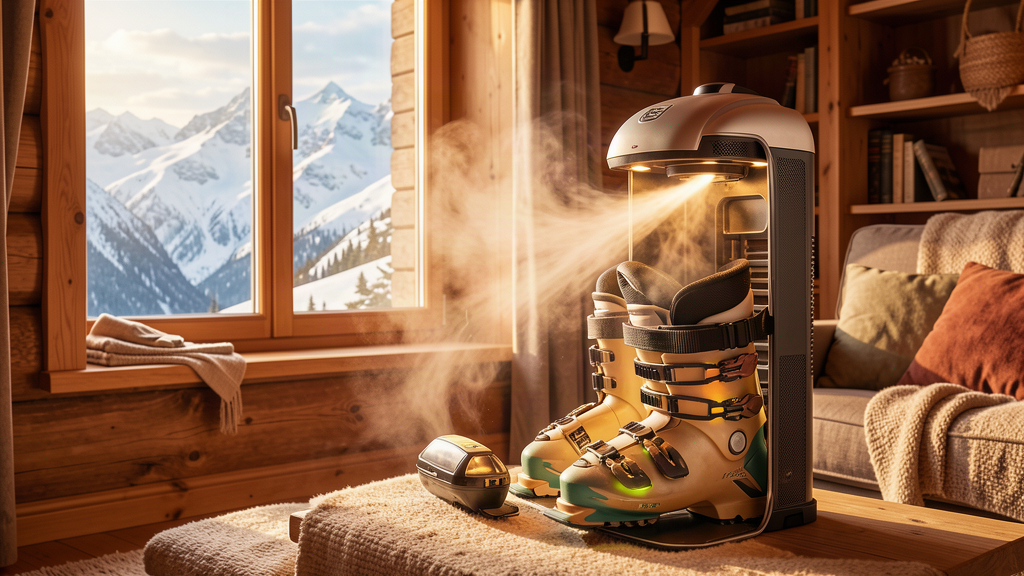
A dedicated boot dryer is the fastest and most convenient way to dry boots in a workshop. Most models use gentle heat and forced air to push warm air through the inside of the boot. Typical boot dryers operate at temperatures between 100°F and 120°F — warm enough to evaporate moisture efficiently but not so hot that they damage most materials. To use one, place the drying tubes inside each boot, plug it in, and set the timer if your model has one. Many dryers offer a no-heat mode that uses ambient air only, which is ideal for delicate materials like premium leather.
One advantage of using a boot dryer in the workshop is that you can leave it running overnight without worrying about noise in the house. Convection models, like the PEET Original Electric Shoe and Boot Dryer, are especially quiet and gentle on leather. For faster drying or multiple pairs, a forced air model like the DryGuy Force Dry DX is worth considering. Place the unit on a stable, flat surface away from flammable materials like cardboard boxes, paint cans, and gasoline.
Tips for Faster Drying in a Workshop
If you need your boots dry by morning, a few simple tricks can speed things up. First, always remove the insoles and laces — this single step can cut drying time by several hours. Second, stuff the boots with newspaper and replace it frequently. The paper pulls moisture from deep inside the lining that air alone can’t reach quickly. Third, use a fan in combination with newspaper stuffing. The paper absorbs moisture from the interior, and the fan carries it away. Together, they can dry most boots in two to four hours.
Finally, consider using a dehumidifier if your workshop tends to be damp. High humidity slows evaporation regardless of temperature. A small dehumidifier can make a noticeable difference, especially during rainy seasons. If you’re drying boots regularly, a boot rack near a heat source or fan can become a permanent fixture that keeps your gear organized and ready to go.
Common Mistakes to Avoid
Some drying methods do more harm than good. Never put boots directly on a radiator, in front of a space heater at close range, or in an oven. Temperatures above 120°F can warp soles, crack leather, melt adhesives, and damage waterproof membranes. Don’t leave wet boots in a closed bag or locker — trapped moisture breeds bacteria and mold, which causes odor and breaks down the boot material. And don’t wear boots that are still damp inside, even if the exterior feels dry.
Don’t skip the prep work either. Tossing soaked boots into the workshop and walking away is the slowest possible approach. Five minutes of prep — removing insoles, laces, and surface moisture — can save you hours of waiting. Also, don’t store boots in plastic bags or airtight containers while they’re still damp. This traps moisture and creates the perfect environment for mold and mildew. If you need to transport wet boots, use a mesh bag or a breathable tote that allows air to circulate.
Our Recommendations
If you only occasionally deal with damp boots, air drying in the workshop is perfectly adequate. Use newspaper stuffing, a fan, and a little patience — it’s free, safe, and effective. If wet boots are a regular part of your life, a dedicated boot dryer is a practical investment. For most people, a convection model like the PEET Original is the best starting point — it’s silent, gentle on leather, and costs pennies to run overnight. See our full breakdown in 5 Best Boot Dryers for Work Boots in 2026.
If you need faster drying or want to dry two pairs at once, a forced air model like the DryGuy Force Dry DX is worth the upgrade. And if you’re curious how the two technologies compare, read our guide on convection vs forced air boot dryers.
Frequently Asked Questions
Can I dry boots in an unheated workshop during winter?
Yes, but it will take longer. Cold air holds less moisture and slows evaporation. If you need faster results, use a boot dryer with a heat setting or a small space heater — just keep it at least 3 feet away from the boots and never leave it unattended.
How do I prevent mold from growing on boots in the workshop?
The key is airflow and thorough drying. Mold thrives in damp, still environments. Use a fan, remove the insoles, and stuff the boots with newspaper to pull moisture out quickly. Make sure your workshop is well-ventilated — open a window or the door a few inches. If your workshop is consistently humid, a dehumidifier can help.
Is it safe to leave a boot dryer running overnight in the workshop?
Yes, most boot dryers are designed for overnight use. Convection models like the PEET Original operate at low temperatures and have no moving parts, making them especially safe. Forced air models typically include timers that shut off automatically. Always follow the manufacturer’s instructions and place the dryer on a stable, flat surface away from flammable materials.
How long does it take to dry boots in a workshop?
It depends on the method and conditions. Air drying with a fan and newspaper stuffing takes two to four hours for most boots. Without a fan, it can take 12 to 24 hours. A boot dryer typically dries boots in one to three hours. Temperature, humidity, and how soaked the boots are all affect the total time.
Can I dry rubber boots in the workshop?
Yes, rubber boots dry well in a workshop. Wipe off excess water, remove any liners or insoles, and place them upright with good airflow. Rubber doesn’t absorb moisture the way leather or fabric does, so they dry relatively quickly. A fan or boot dryer speeds up the process, but even air drying usually takes only a few hours.
Conclusion
Drying boots in a workshop is straightforward once you have a system in place. Remove the insoles and laces, wipe off surface moisture, and choose between air drying with a fan and newspaper or using a dedicated boot dryer for faster results. Avoid high heat, keep the area ventilated, and your boots will be ready when you need them — without tracking mud through the house. With a little preparation and the right approach, you can keep your boots in good condition and ready for the next wet day.