
How to Stop Boots From Smelling
Boot smell is one of the most common problems we hear about, and it’s almost always caused by one thing: moisture. When your feet sweat inside a boot, that moisture gets absorbed into the lining, insole and upper material. Bacteria thrive in that damp, warm environment, and the waste they produce is what creates the odor.
The good news is that stopping boot smell is straightforward once you understand the cause. It comes down to drying your boots properly, keeping them clean, and storing them in a way that doesn’t trap moisture. Below we walk through exactly how to do all three, plus answer the most common questions about boot odor.
Disclosure: Boot Dry Expert is reader-supported. As an Amazon Associate, we earn from qualifying purchases. This doesn’t change the price you pay, and it doesn’t change our recommendations.
Why Boots Smell in the First Place
Your feet have more sweat glands than almost any other part of your body — roughly 250,000 per foot. During a normal day, each foot can produce around half a pint of sweat. Inside a boot, that moisture has nowhere to go. It soaks into the insole, the lining and the upper material, creating the perfect breeding ground for bacteria.
The bacteria themselves don’t smell. It’s the waste they produce as they break down sweat and dead skin cells that creates the odor. The scientific name for foot odor is bromodosis, and it’s the same process that causes armpit smell. The warmer and damper the environment, the faster the bacteria multiply and the worse the smell gets.
Leather boots, work boots and hiking boots are especially prone to odor because they’re often worn for long periods, in demanding conditions, and made from materials that hold moisture. Synthetic liners and mesh can trap odor too, which is why even athletic-style boots can develop a smell over time.
Dry Your Boots Completely After Every Wear
The single most effective thing you can do to stop boots from smelling is to dry them completely after every wear. Bacteria need moisture to survive. If your boots are dry when you put them on, there’s no environment for odor-causing bacteria to grow in the first place.
Start by pulling out the insoles and setting them aside to air dry separately. Insoles absorb a huge amount of sweat and are often the smelliest part of the boot. Loosen the laces fully and pull the tongue forward so air can circulate inside the boot. If the boots are wet from rain or snow, stuff them with newspaper to draw out moisture from the inside.
Never dry boots in front of a radiator, on a space heater or in a clothes dryer. High heat damages leather, weakens adhesives and can warp the shape of the boot. Instead, let them air dry at room temperature in a well-ventilated area. For a faster and more thorough dry, a boot dryer is the best tool for the job — more on that below.
Use a Boot Dryer to Eliminate Odor-Causing Bacteria
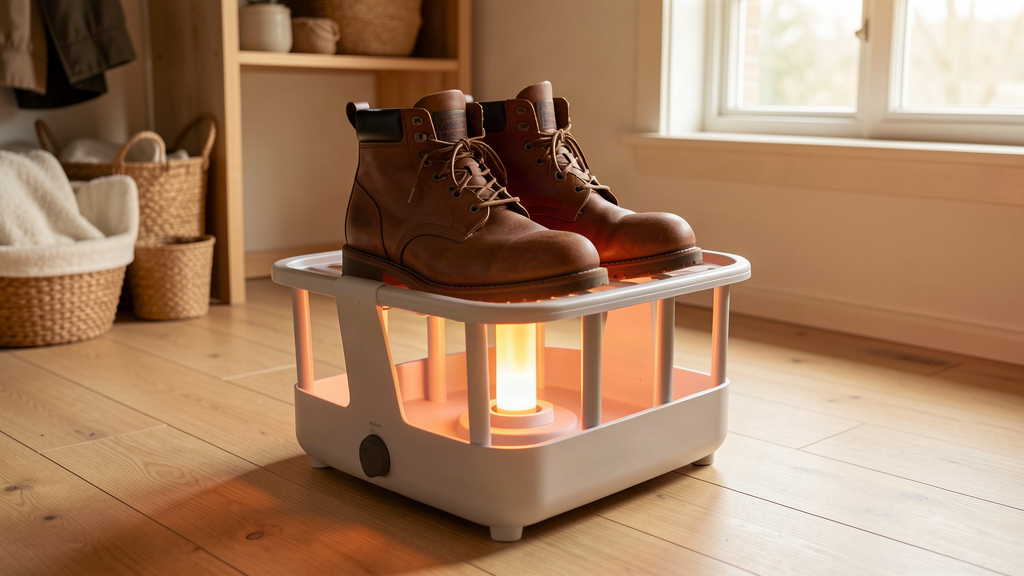
A boot dryer is the most reliable way to get boots completely dry, and it’s the step that makes the biggest difference for odor. By removing all moisture from the inside of the boot, you eliminate the environment bacteria need to survive. Many boot dryers also use gentle heat, which further inhibits bacterial growth.
There are two main types of boot dryers. Convection dryers use warm air that rises naturally through the boot — they’re silent, gentle on leather and very cheap to run. Forced air dryers use a fan to push air through the boot, which dries faster but makes some noise. Both are effective at stopping odor. Popular options include the PEET Original for convection drying and the DryGuy Force Dry DX for faster forced air drying.
For best results, run the dryer overnight or for at least a few hours after every wear. If you rotate between two pairs, dry both pairs so neither sits damp overnight. Some dryers come with extension tubes for tall boots — make sure the warm air reaches the toe box, since that’s the area that stays wettest and smells the worst.
If your boots already have a stubborn odor, try running the dryer with the heat off (on models that offer that setting). Room-temperature air dries the boot without baking in the odor, which can happen if you use high heat on already-smelly boots. For more on dryer types, see our guide to convection vs forced air boot dryers.
Clean Your Boots and Insoles Regularly
Drying alone won’t stop odor if bacteria and dead skin cells have built up inside the boot. Regular cleaning removes the material bacteria feed on, which keeps smell from coming back even after a thorough dry.
For leather boots, wipe the inside with a damp cloth and a small amount of mild soap once a week. Let them air dry fully before wearing again. For synthetic liners and insoles, you can hand wash them with warm water and mild detergent, then let them dry completely. Some insoles are machine washable — check the manufacturer’s instructions first.
Once the boots are clean and dry, sprinkle baking soda inside and let it sit overnight. Baking soda absorbs residual odor and moisture. Shake it out in the morning before wearing. You can also use cedar shoe trees or moisture-absorbing inserts between wears to keep the inside of the boot fresh.
Store Boots Properly Between Wears
How you store your boots matters more than most people realize. Tossing damp boots into a closet, a gym bag or the trunk of your car traps moisture and gives bacteria exactly the environment they need to multiply. Always store boots in a cool, dry, well-ventilated area. Avoid airtight containers and plastic bags. If you have a mudroom or entryway with good airflow, that’s ideal. For long-term storage, use cedar shoe trees to hold the shape of the boot and absorb residual moisture.
If you wear the same boots every day, try to rotate between two pairs if possible. Giving each pair a full 24 hours to dry out between wears makes a significant difference. At minimum, pull out the insoles and open the laces so air can circulate inside the boot while it’s in the closet.
Our Recommendations
For most people, a convection dryer like the PEET Original is the best starting point for stopping boot smell. It’s silent, gentle on leather and costs pennies to run overnight. See our full breakdown in 5 Best Boot Dryers for Work Boots in 2026.
If you need faster drying or want to dry two pairs at once, a forced air model like the DryGuy Force Dry DX is worth the upgrade. For a deeper comparison of both types, see our guide to convection vs forced air boot dryers.
Frequently Asked Questions
What causes boots to smell so bad?
Boot smell is caused by bacteria that thrive in the warm, moist environment inside a boot. The bacteria break down sweat and dead skin cells, and the waste they produce is what creates the odor. The damper the boot, the faster the bacteria multiply and the worse the smell gets.
How do I get the smell out of my boots?
The most effective approach is to dry your boots completely after every wear, clean the insoles and lining regularly, and store them in a well-ventilated area. For existing odor, clean the inside with mild soap and water, let them dry fully, then use baking soda overnight to absorb residual smell. A boot dryer makes the drying step much more reliable.
Can I put my boots in the washing machine?
It depends on the boot. Some synthetic and fabric boots are machine washable, but leather boots and boots with waterproof membranes should never go in a washing machine. High heat and agitation can damage leather, weaken adhesives and destroy waterproof coatings. When in doubt, hand clean with mild soap and water and let them air dry.
Does baking soda really work for boot odor?
Yes. Baking soda is a natural deodorizer that absorbs odor molecules rather than just masking them. Sprinkle a generous amount inside the boot, let it sit overnight, and shake it out in the morning. It’s most effective on boots that are already clean and dry — it won’t fix odor caused by bacteria living in a damp boot.
How often should I dry my boots?
Every time you wear them. Even if your boots don’t feel wet, they absorb sweat during the day. Running a boot dryer for a few hours or overnight after every wear is the best way to prevent odor from developing in the first place. If you rotate between two pairs, dry both pairs each night.
Are cedar shoe trees good for preventing boot smell?
Yes. Cedar shoe trees absorb moisture, hold the shape of the boot and have natural antibacterial properties. They’re especially useful for leather boots that you wear regularly. Use them between wears to keep the inside of the boot dry and fresh.
Conclusion
Stopping boot smell comes down to one principle: keep your boots dry. Bacteria cause odor, and bacteria need moisture to survive. Dry your boots completely after every wear, clean them regularly, and store them in a well-ventilated area. A boot dryer makes the first step effortless and is the single best investment you can make for odor-free boots. Follow these steps and your boots will smell fresher, feel more comfortable and last noticeably longer.