
How to Dry Boots Fast Without a Boot Dryer
Wet boots are miserable, and waiting two days for them to air dry on their own is not an option when you need them tomorrow morning. Whether you got caught in a downpour, slogged through slush, or just have sweaty feet after a long shift, there are several effective ways to dry boots fast without a dedicated boot dryer.
We’ll walk through the methods that actually work, from simple tricks you can do right now with household items to techniques that cut drying time in half. Most of these approaches use things you already own, and none require special equipment.
Disclosure: Boot Dry Expert is reader-supported. As an Amazon Associate, we earn from qualifying purchases. This doesn’t change the price you pay, and it doesn’t change our recommendations.
Remove the Insoles and Laces First
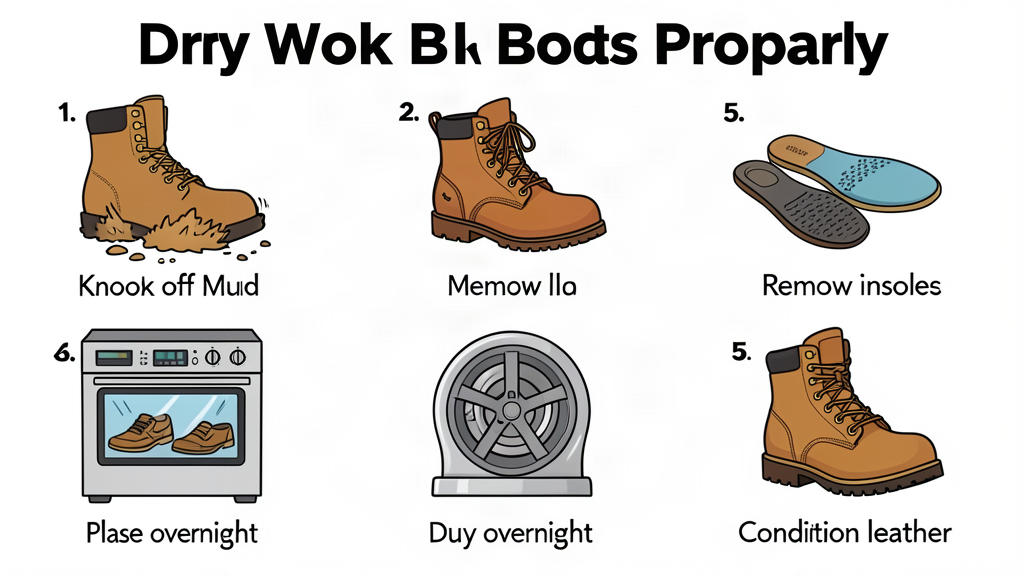
The single most effective thing you can do is take the insoles out of your boots. Insoles are thick, absorbent, and sit at the very bottom of the boot where air barely circulates. Left in place, they can hold moisture for 24 to 48 hours even when the rest of the boot feels dry.
Pull them out and set them somewhere warm and airy — on a radiator, near a vent, or propped up against a wall so air hits both sides. While you’re at it, remove the laces. Laces trap moisture against the eyelets and tongue, and they slow airflow through the boot. If you have a second pair of laces, swap them in so you can still wear the boots while the originals dry.
Open the boots as wide as you can. Pull the tongue forward and away from the footbed. If your boots have a side zipper, unzip it fully. The goal is to expose as much interior surface area to moving air as possible.
Wipe Down the Exterior
Before you focus on the inside, deal with the outside. Use a towel to wipe off as much surface water as you can — the toe, the heel, the sole, and the upper. Every drop of water on the exterior is a drop that will either evaporate into the interior or slow down the drying process.
For leather boots, use a clean, dry microfiber cloth and pay attention to seams and stitching where water collects. For synthetic or fabric boots, a towel works fine. If the boots are muddy, rinse them under cool water first and then wipe them down — dried mud traps moisture against the material.
Stuff with Newspaper or Paper Towels
Newspaper is one of the oldest and most effective boot-drying tricks. Crumple sheets of newspaper into loose balls and stuff them inside the boot, pressing them down into the toe box and filling the shaft. The paper absorbs moisture from the interior lining and pulls it away from the boot material.
Replace the newspaper every 30 to 60 minutes as it becomes damp. You’ll be surprised how much water it pulls out. Plain white paper towels work too, though they tend to fall apart faster than newspaper. Avoid glossy magazine paper — the coating resists absorption.
For tall boots that go 10 inches or higher, stuff the shaft in layers. Fill the toe area first, then add more crumpled paper up through the calf. The paper also helps the boot hold its shape while it dries, which prevents creasing and cracking in leather.
Use a Fan to Speed Up Airflow
Moving air is the key to fast drying. A simple box fan or desk fan pointed at your boots can cut drying time by half compared to leaving them still. Position the boots so air flows directly into the opening — tilt them on their side or prop them up with the mouth facing the fan.
If you have a floor vent or a heating vent in your home, place the boots directly in front of it. The warm, moving air from your HVAC system is ideal because it combines heat with airflow. Just make sure the boots are close enough to feel the air but not so close that they block the vent entirely.
For best results, combine the fan method with newspaper stuffing. The paper absorbs moisture from deep inside the lining, and the fan carries it away. Together, they can dry most boots in two to four hours depending on how soaked they are.
Use a Hair Dryer on a Low Setting
A hair dryer is a quick fix for boots that need to be dry in under an hour. Use the lowest heat setting and keep the nozzle at least 6 inches away from the boot material. Move it constantly — don’t hold it in one spot.
Focus on the areas that hold the most moisture: the toe box, the heel cup, and the insole area. If you removed the insoles, dry them separately with the hair dryer too. Keep the boot opening facing you so the warm air flows inside and carries moisture out.
Be careful with leather. High heat dries out leather and causes it to crack. If you’re using a hair dryer on leather boots, keep it on the cool or low-heat setting and stop as soon as the surface feels dry to the touch. The interior will continue to air dry on its own after that.
Try Rice or Silica Gel for Small Moisture
If your boots are damp rather than soaked, rice or silica gel packets can finish the job. Place the boots in a large bag or container with several cups of uncooked rice or a handful of silica gel packets. The desiccant pulls residual moisture out of the lining over several hours.
This method works best as a finishing step after you’ve already removed the bulk of the moisture with newspaper or a fan. It’s particularly useful for leather boots where you want to avoid any heat at all. Leave the boots with the desiccant overnight for best results.
Save the silica gel packets that come with new shoes and electronics — they’re free and reusable. You can reactivate them by spreading them on a baking sheet and placing them in a 200°F oven for a couple of hours.
Avoid These Common Mistakes
Some drying methods do more harm than good. Never put boots directly on a radiator, in front of a space heater, or in an oven. Temperatures above 120°F can warp soles, crack leather, melt adhesives, and damage waterproof membranes. The outside of the boot may feel dry while the interior is still soaked, and the heat can cause irreversible damage before you realize it.
Don’t leave wet boots in a closed bag or locker. Trapped moisture breeds bacteria and mold, which causes odor and breaks down the boot material. Always let boots dry in a well-ventilated area with some airflow, even if it takes a little longer.
Finally, don’t wear boots that are still damp inside. Even if the exterior feels dry, a damp interior will make your feet cold and uncomfortable, and it creates the perfect environment for blisters and fungal infections. Give them the extra hour — your feet will thank you.
Our Recommendations
If you find yourself drying boots regularly, a dedicated boot dryer is worth the investment. For most people, a convection model like the PEET Original is the best starting point — it’s silent, gentle on leather, and costs pennies to run overnight. See our full breakdown in 5 Best Boot Dryers for Work Boots in 2026.
If you need faster drying or want to dry two pairs at once, a forced air model like the DryGuy Force Dry DX is worth the upgrade. And if you’re curious how the two technologies compare, read our guide on convection vs forced air boot dryers.
Frequently Asked Questions
How long does it take boots to air dry without a dryer?
Boots left to air dry on their own typically take 24 to 48 hours depending on the material, how soaked they are, and the humidity in your home. Leather boots take longer than synthetic boots because the material is denser and holds more moisture.
Can I put boots in the microwave to dry them?
No. Never put boots in the microwave. The metal eyelets, shanks, and adhesives in most boots can spark, melt, or catch fire. Even boots without metal parts can be damaged by the uneven heating. It’s a fire hazard and will ruin your boots.
Is it safe to use a hair dryer on leather boots?
Yes, as long as you use the lowest heat setting and keep the nozzle at least 6 inches away from the leather. Move it constantly and stop as soon as the surface feels dry. High heat dries out leather and causes cracking, so less is more.
What is the fastest way to dry boots without a dryer?
The fastest method combines newspaper stuffing with a fan. Remove the insoles, stuff the boots with crumpled newspaper, replace it every 30 to 60 minutes, and point a fan directly at the boot openings. This can dry most boots in two to four hours.
Can I dry boots overnight with newspaper inside?
Yes, you can leave newspaper in boots overnight. It will continue to absorb moisture while you sleep. In the morning, remove the paper and let the boots air out for an hour before wearing them. This is a safe, no-heat method that works well for leather.
How do I prevent boots from smelling while they dry?
The key is airflow. Odor-causing bacteria thrive in damp, still environments. Use a fan, remove the insoles, and stuff the boots with newspaper to pull moisture out quickly. Once the boots are fully dry, sprinkle baking soda inside overnight and shake it out in the morning to neutralize any lingering odor.
Conclusion
Drying boots fast without a boot dryer comes down to two things: removing as much moisture as possible and getting air moving through the boot. Remove the insoles, stuff with newspaper, and point a fan at them — that combination handles most situations in a few hours. Avoid high heat, be patient with leather, and your boots will be ready when you need them.